
OUR WORKSHOP
Our Workshop was built by hand by the founder of Keepers Furniture, David Nisbet. It sits in the grounds of the Keepers Lodge, where his family have lived for 4 generations and from which Keeper’s Furniture takes its name. The workshop is designed to sit lightly in its environment and was built from as many reclaimed and recycled materials as possible. The design and thought processes that went in to creating it are the same as our furniture, with sustainability, longevity and beauty coming together in harmony with the use of traditional techniques. Please scroll through the gallery to learn more and see the journey.
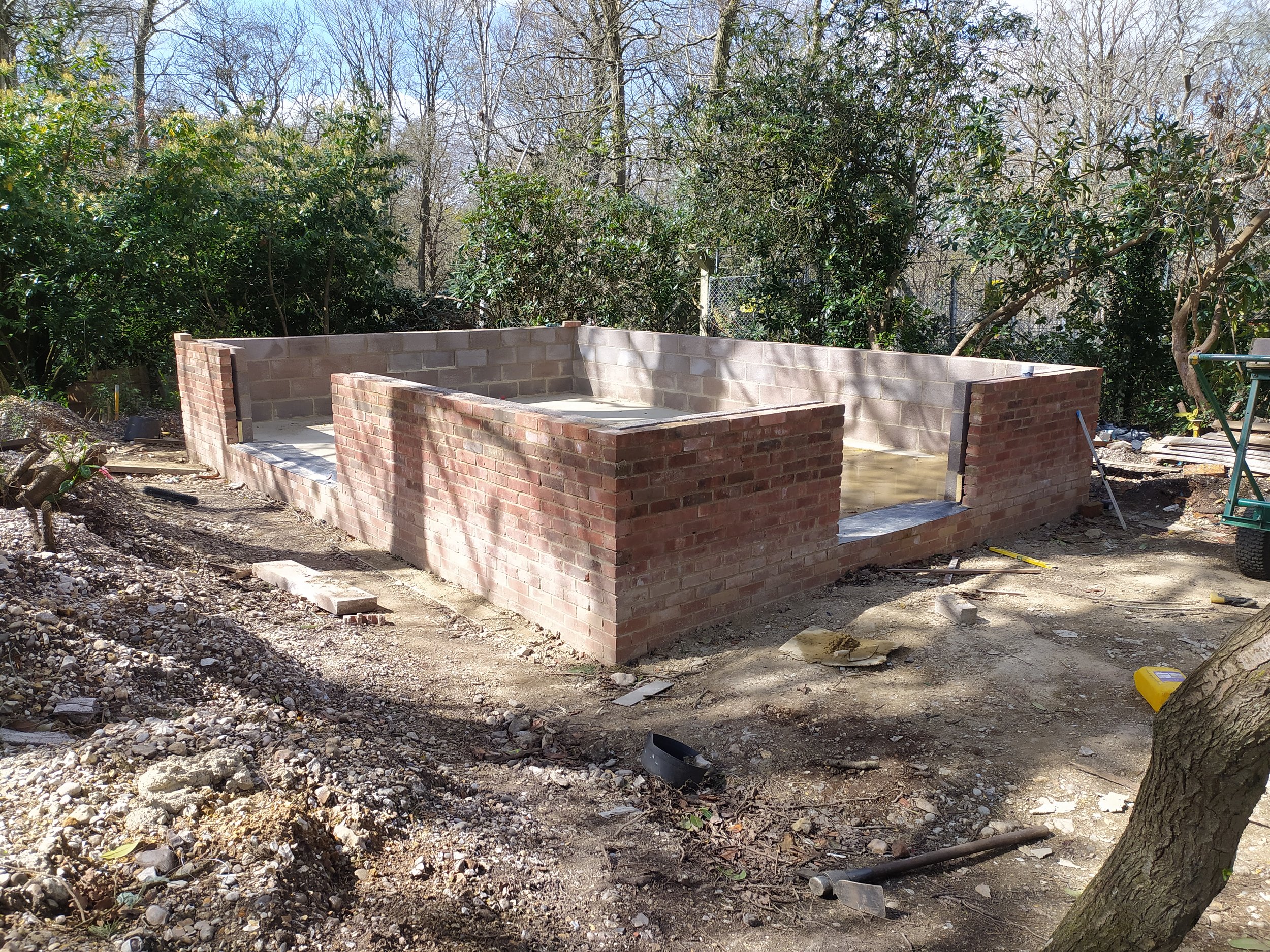
The bricks used to build the workshop were reclaimed from a local demolition and create a sill to keep the timber up and away from the ground.
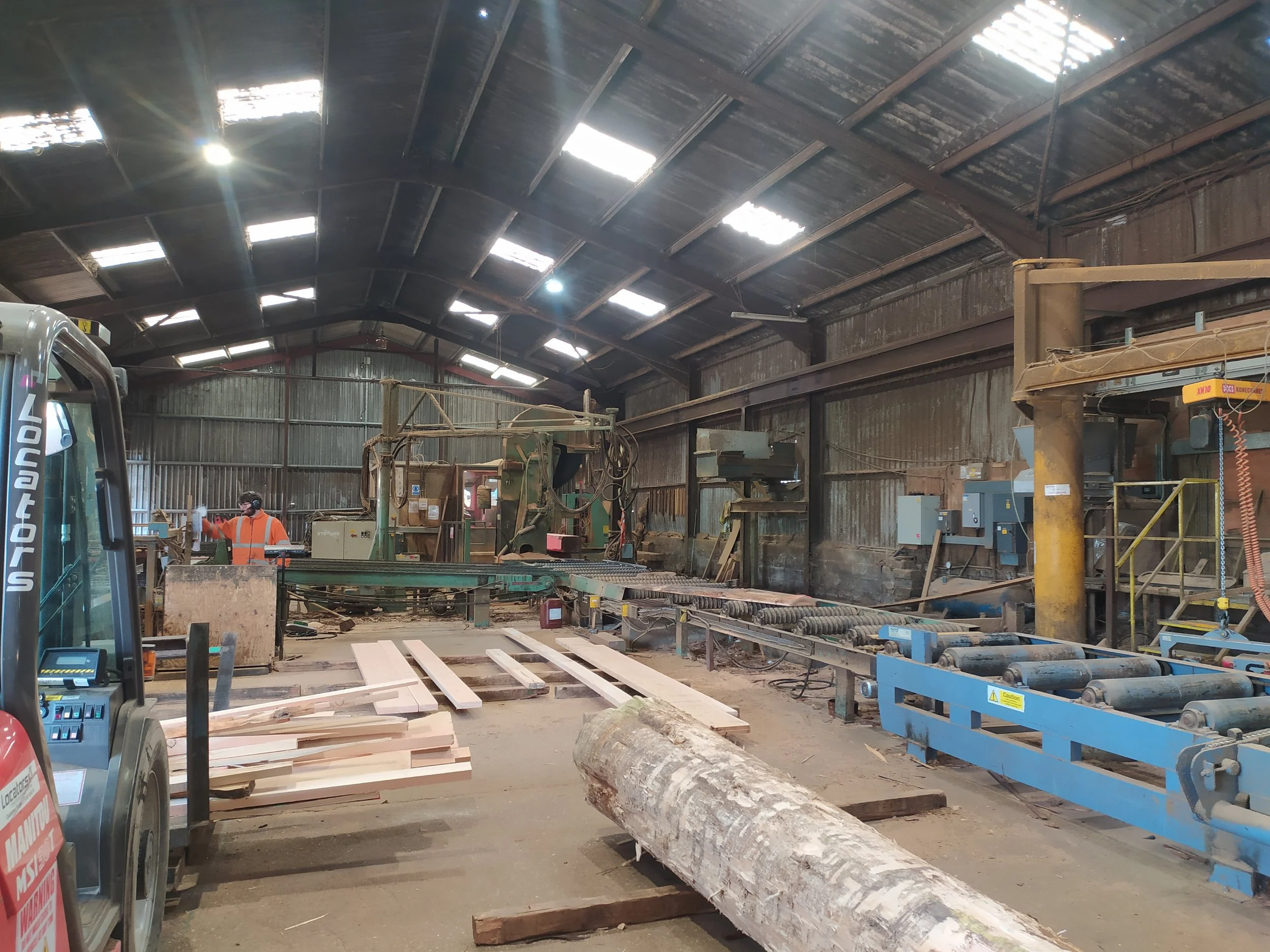
The frame is made from Douglas Fir, sourced from sustainably managed forest in the UK and cut at a local sawmill.
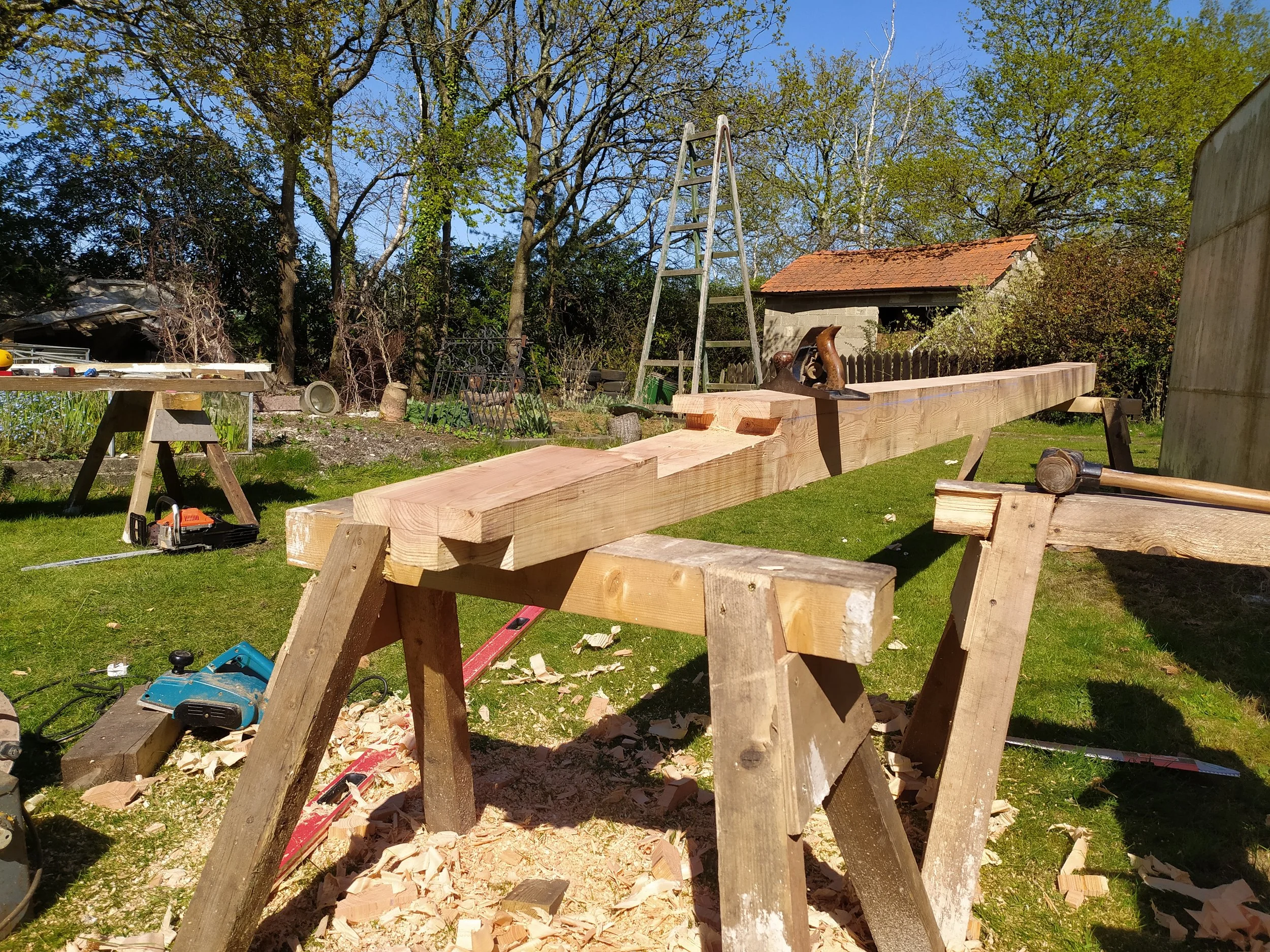
The first step of building a timber frame, is to join the pieces in to the long timbers required to span the whole length of the building.
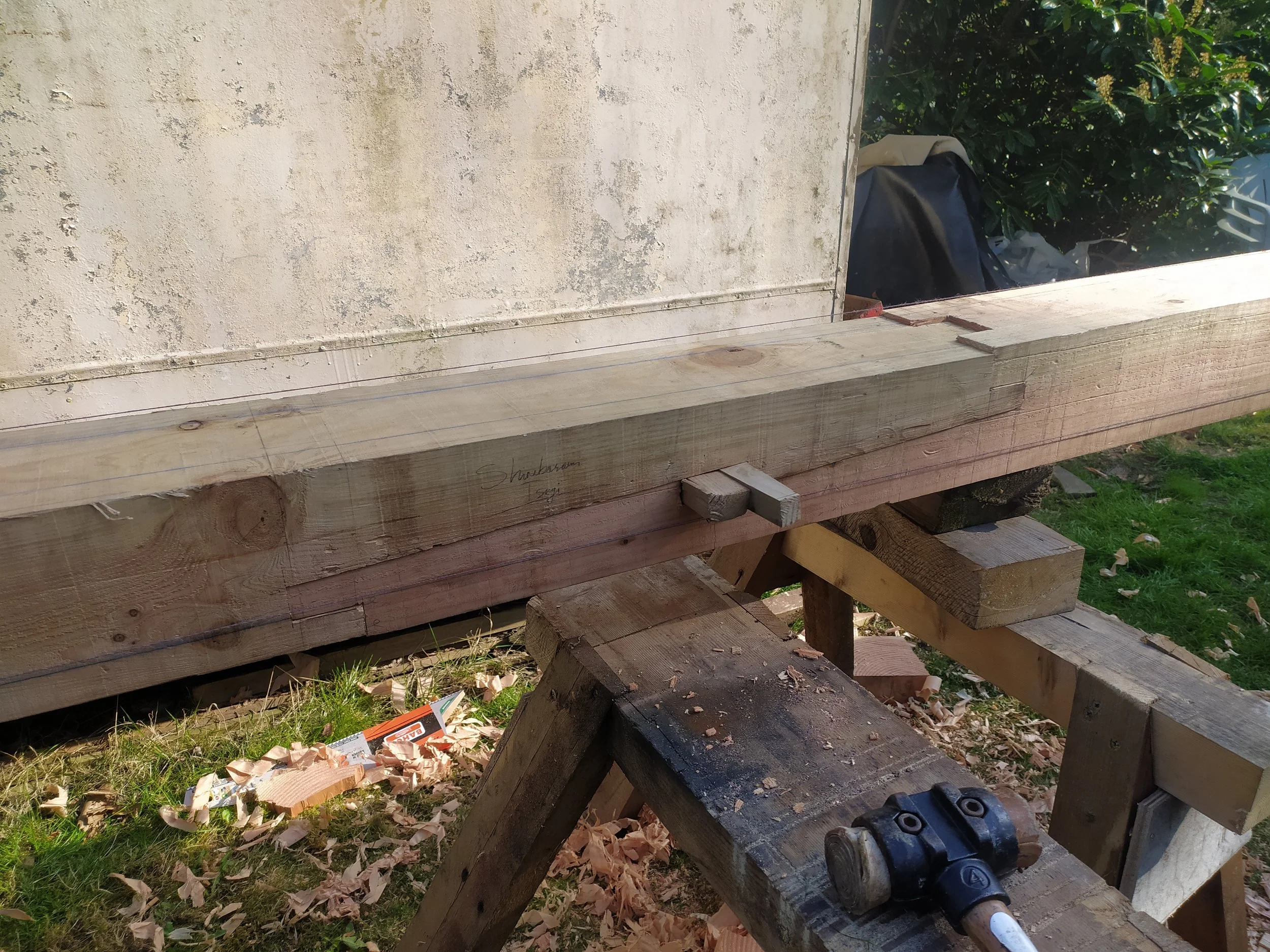
Here we use a Japanese scarf joint to securely join the timbers, using only wedges with no nails, glue or screws.
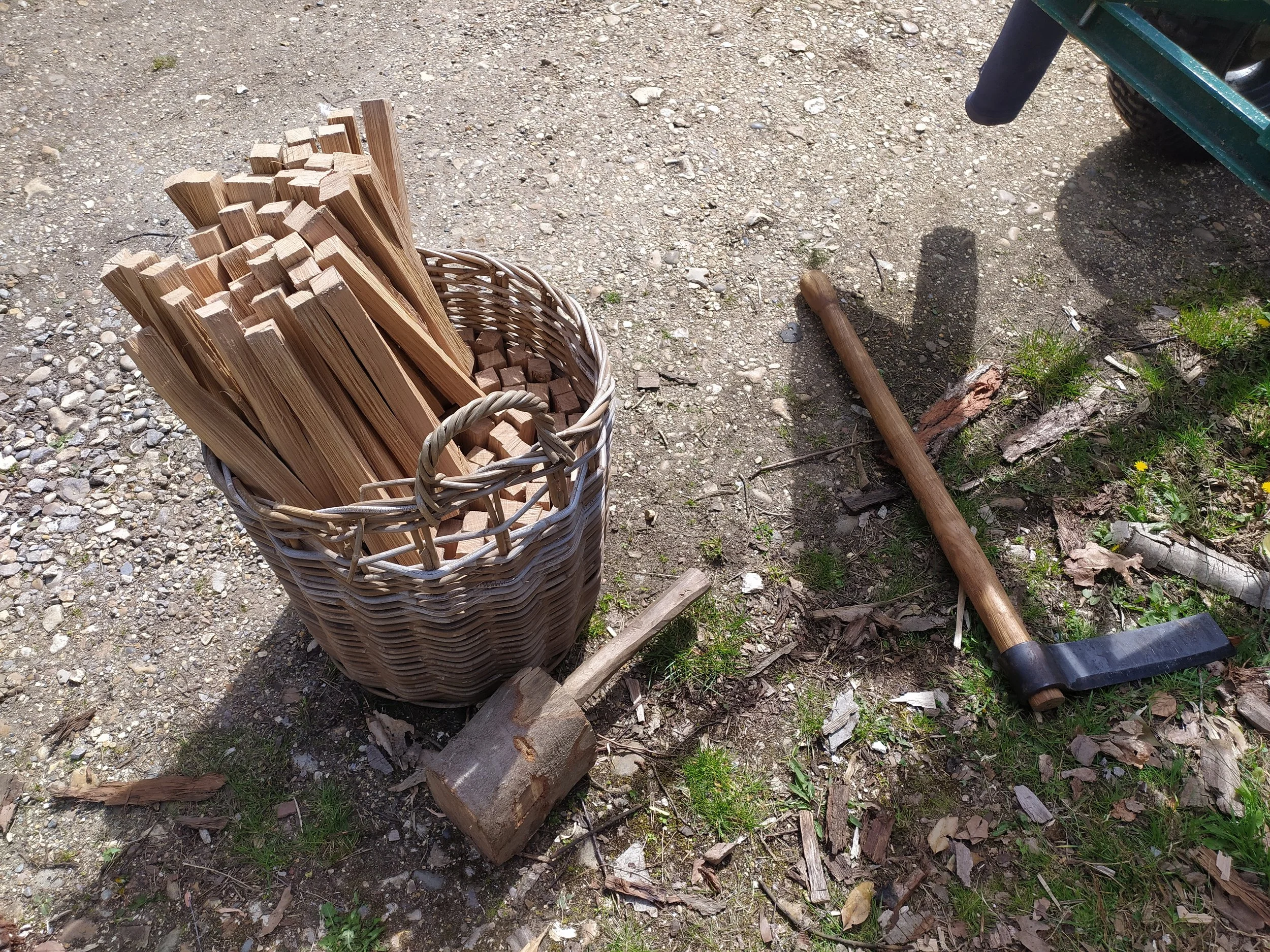
The oak is split in to small sections, to create the oak pegs that hold the joints together.
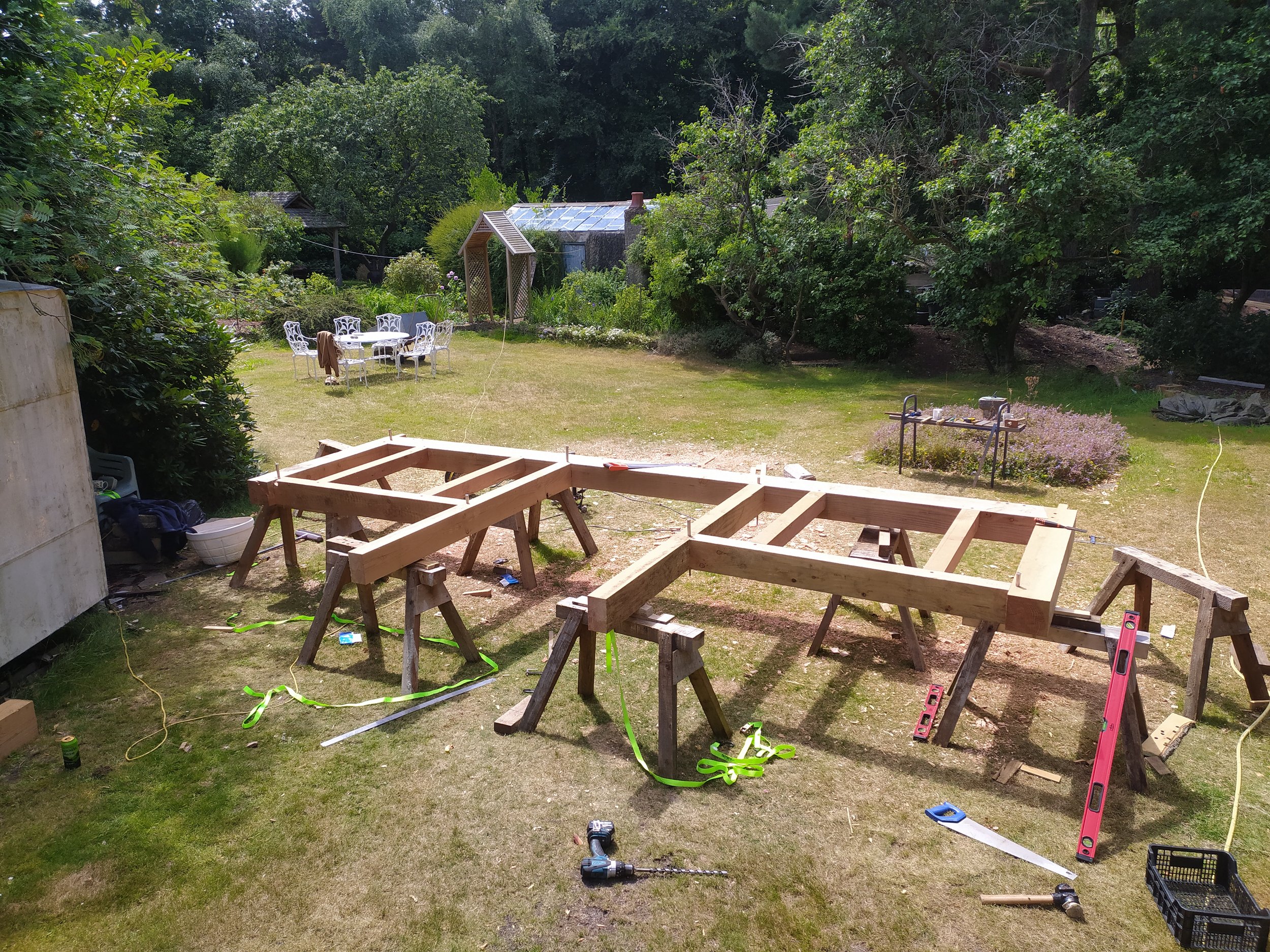
The sections of the building are constructed on the ground and temporarily connected with metal pins.
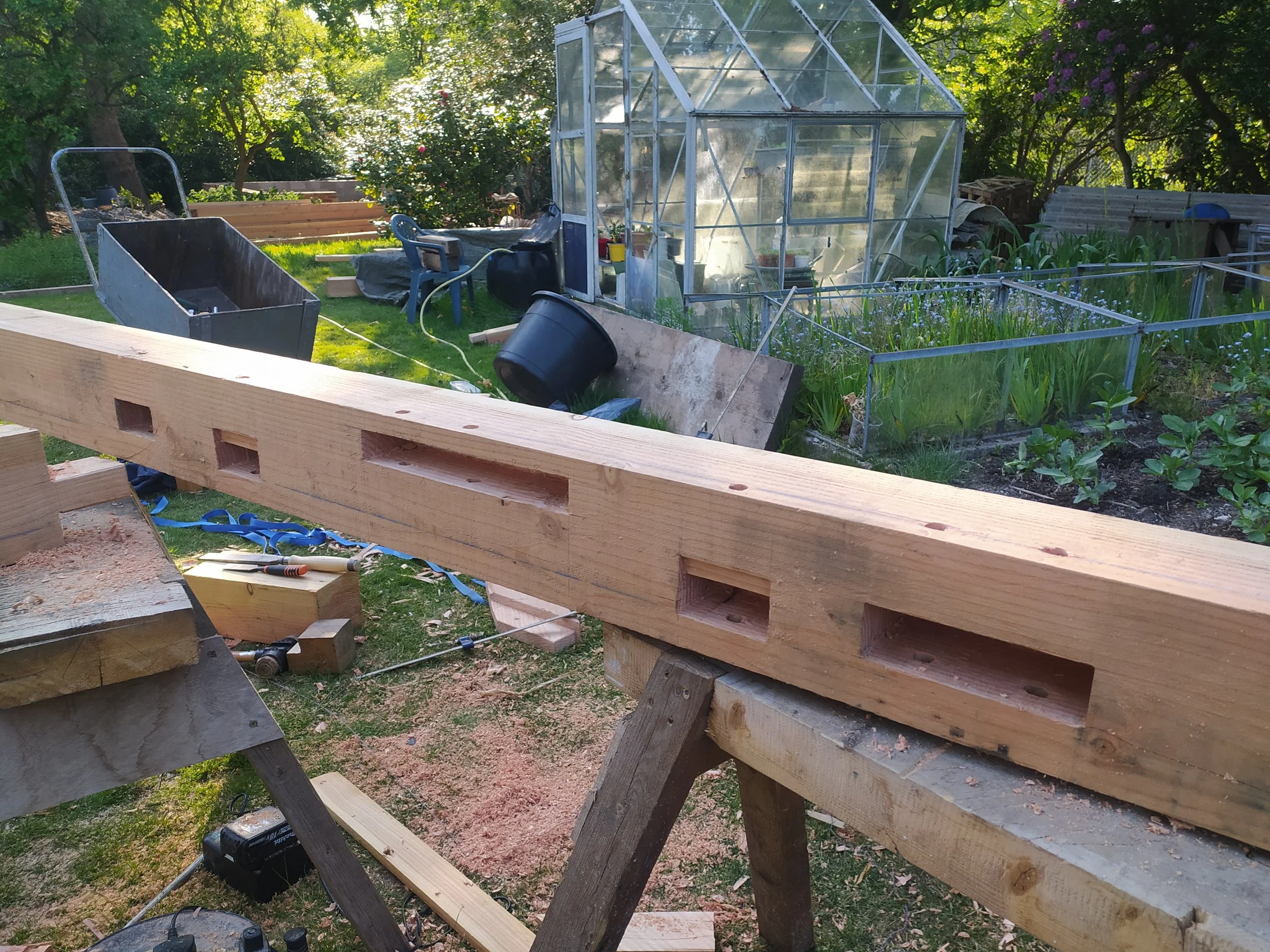
mortices are cut in to the timber and the tenons slot in to these mortices.
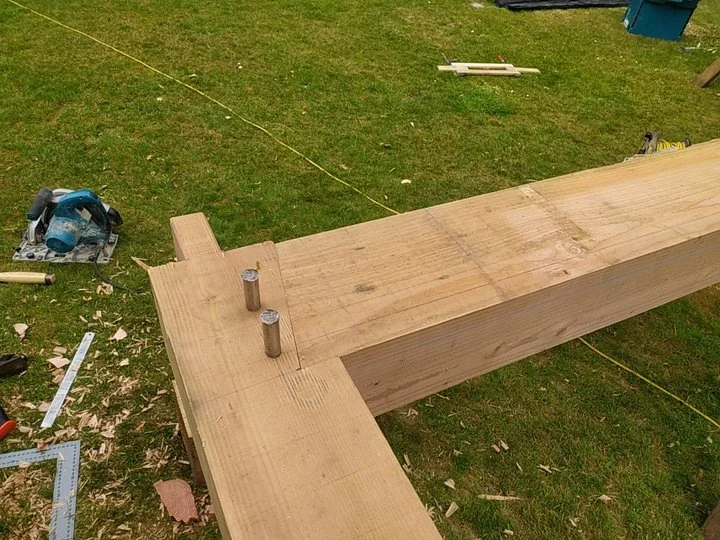
Metal pins secure the joint together temporarily during the building process.
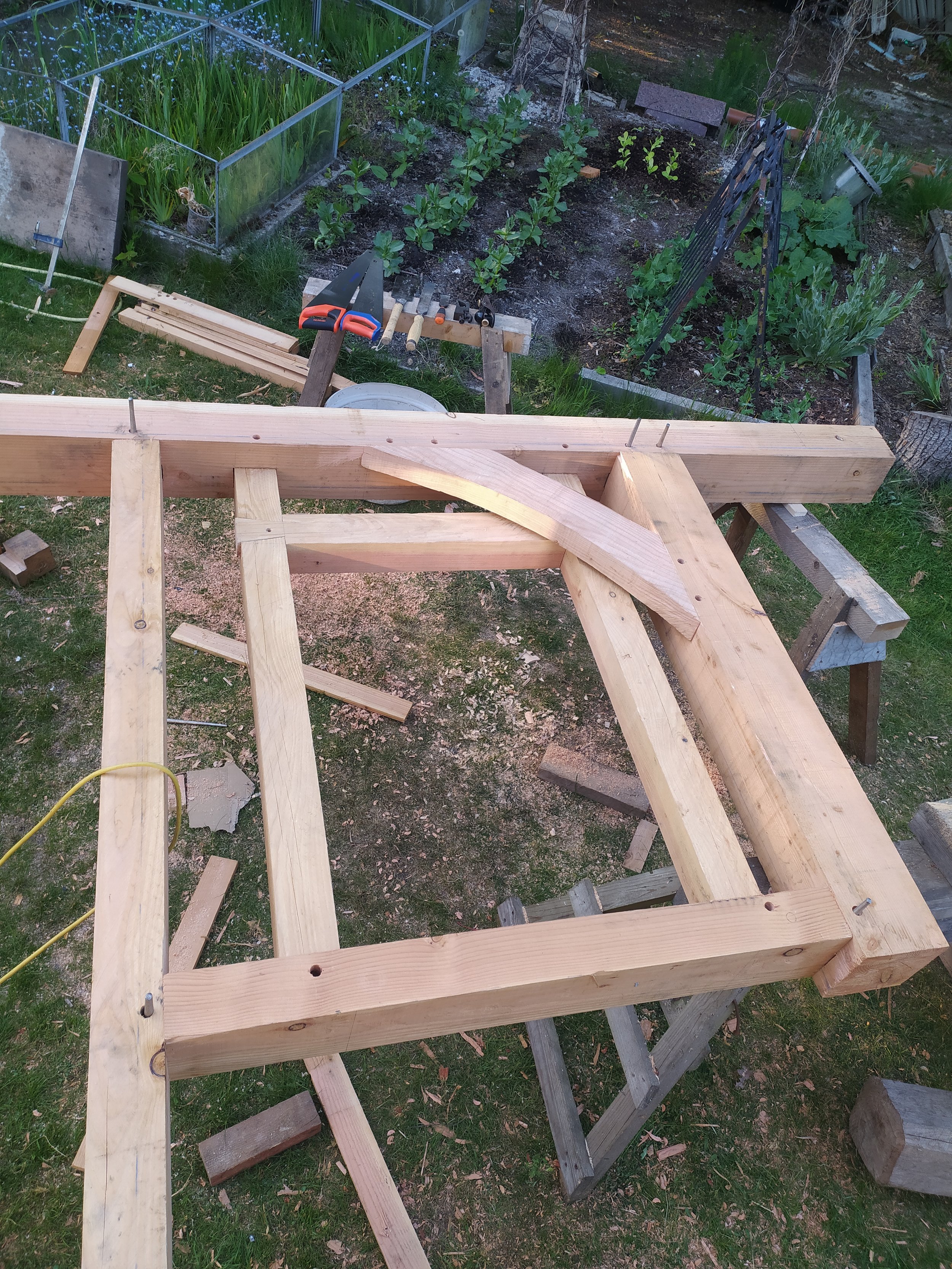
A close up of the window detail, showing the curved brace and dovetail window joints.
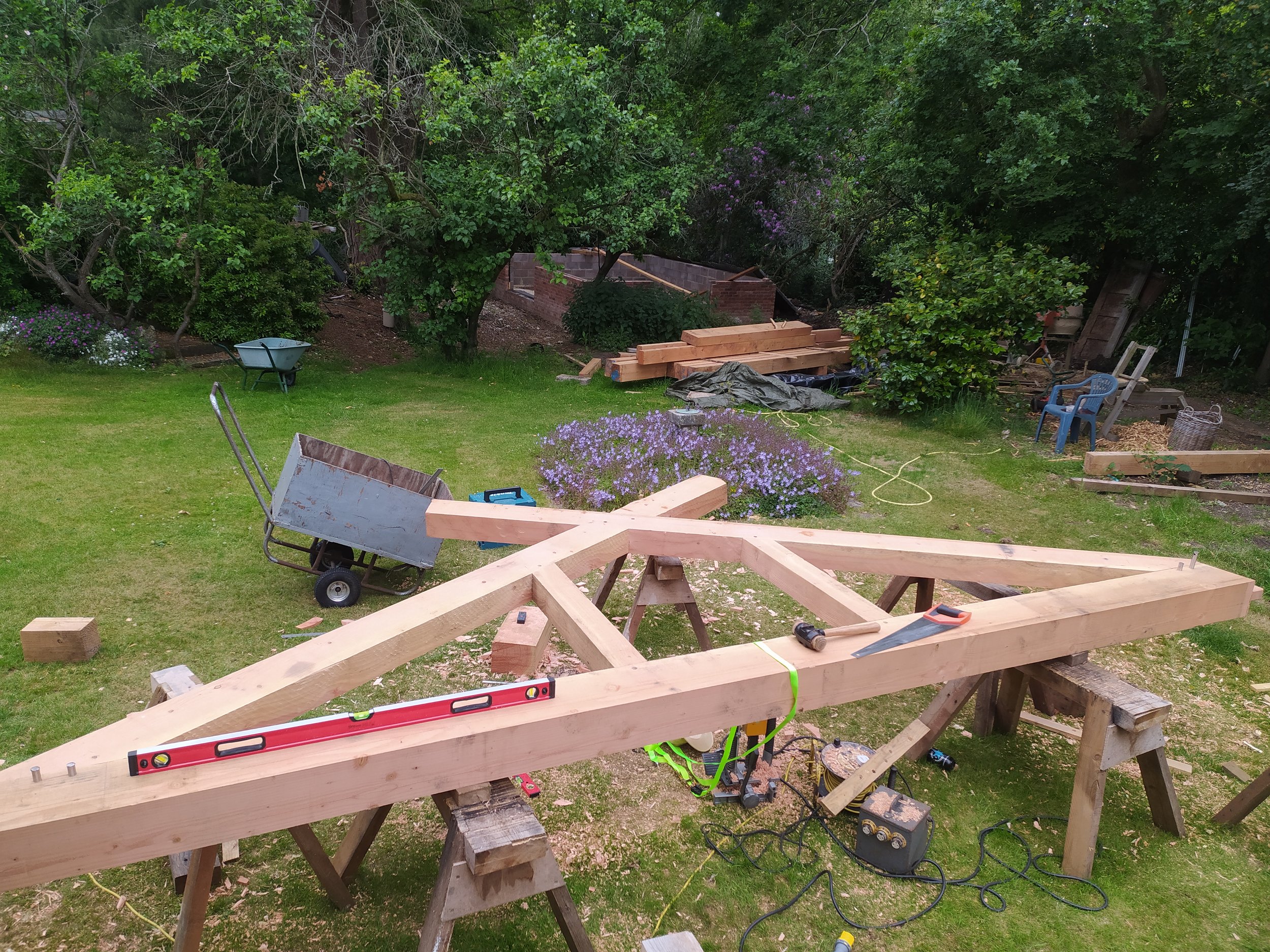
The upper section of the walls, including the main rafters that hold up the roof.
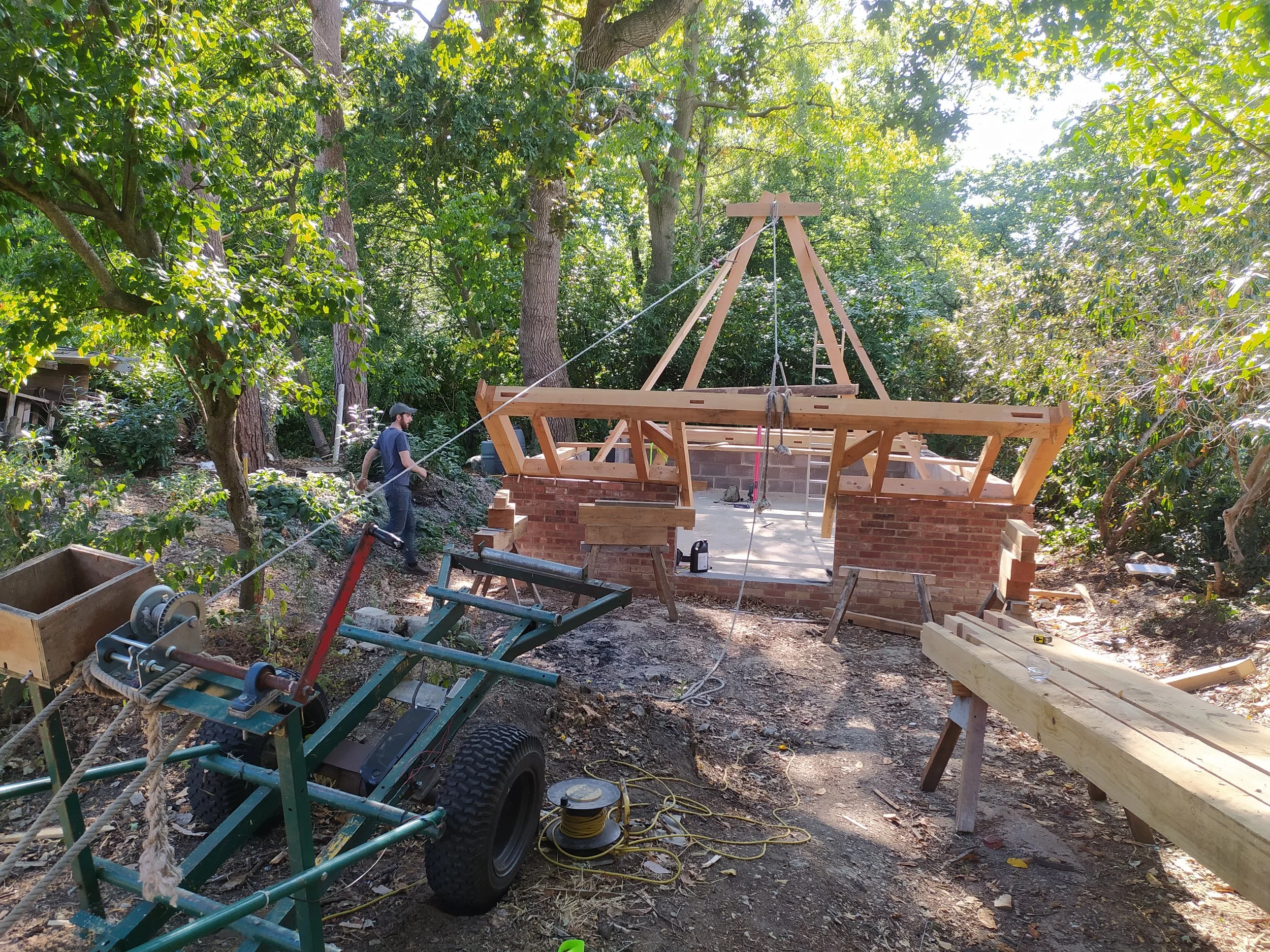
The frames are winched in to position on top of the brickwork using a hand winch.
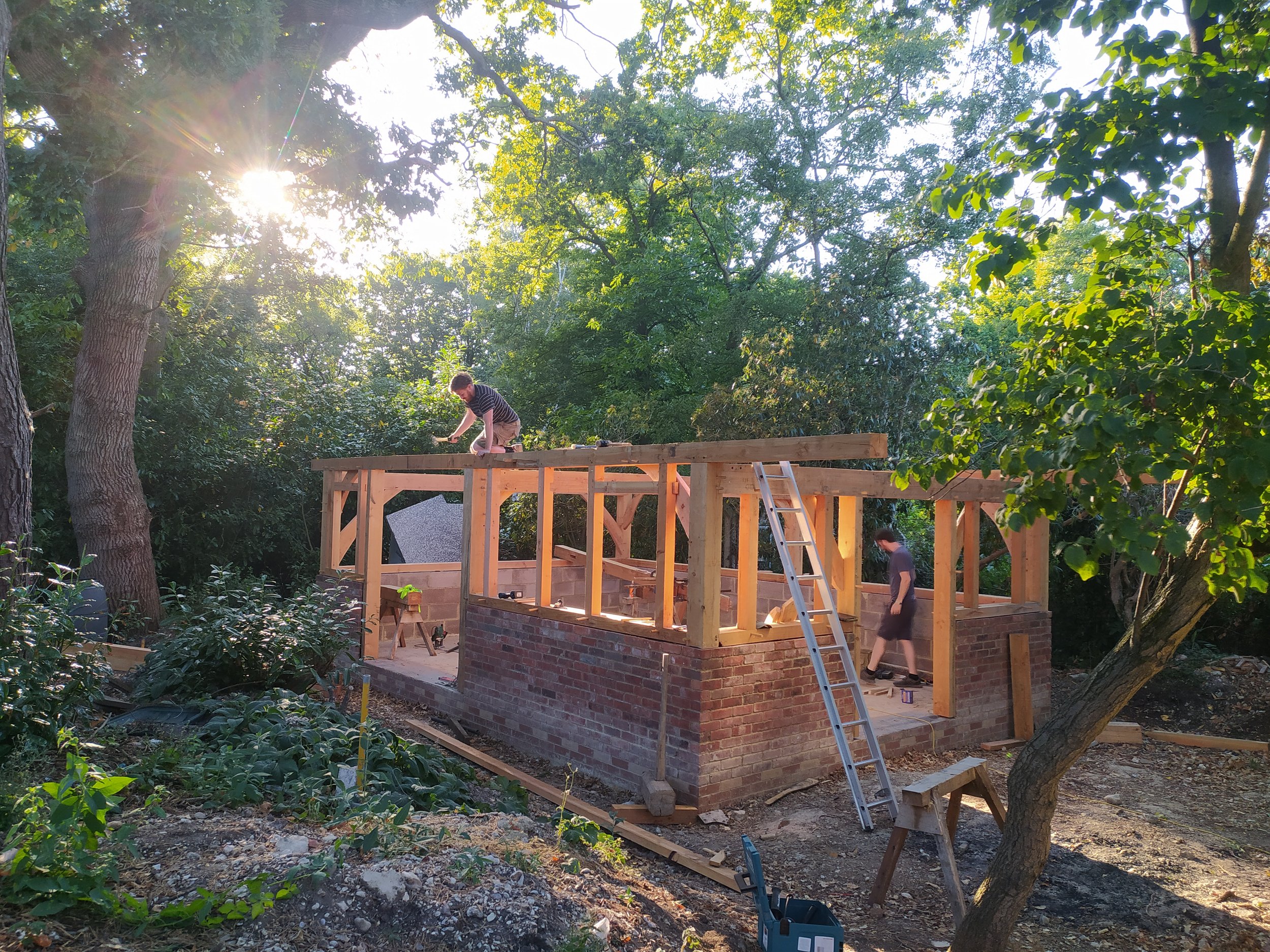
The Frame is first completed and pegged together up to the wall plate before the roof is built.
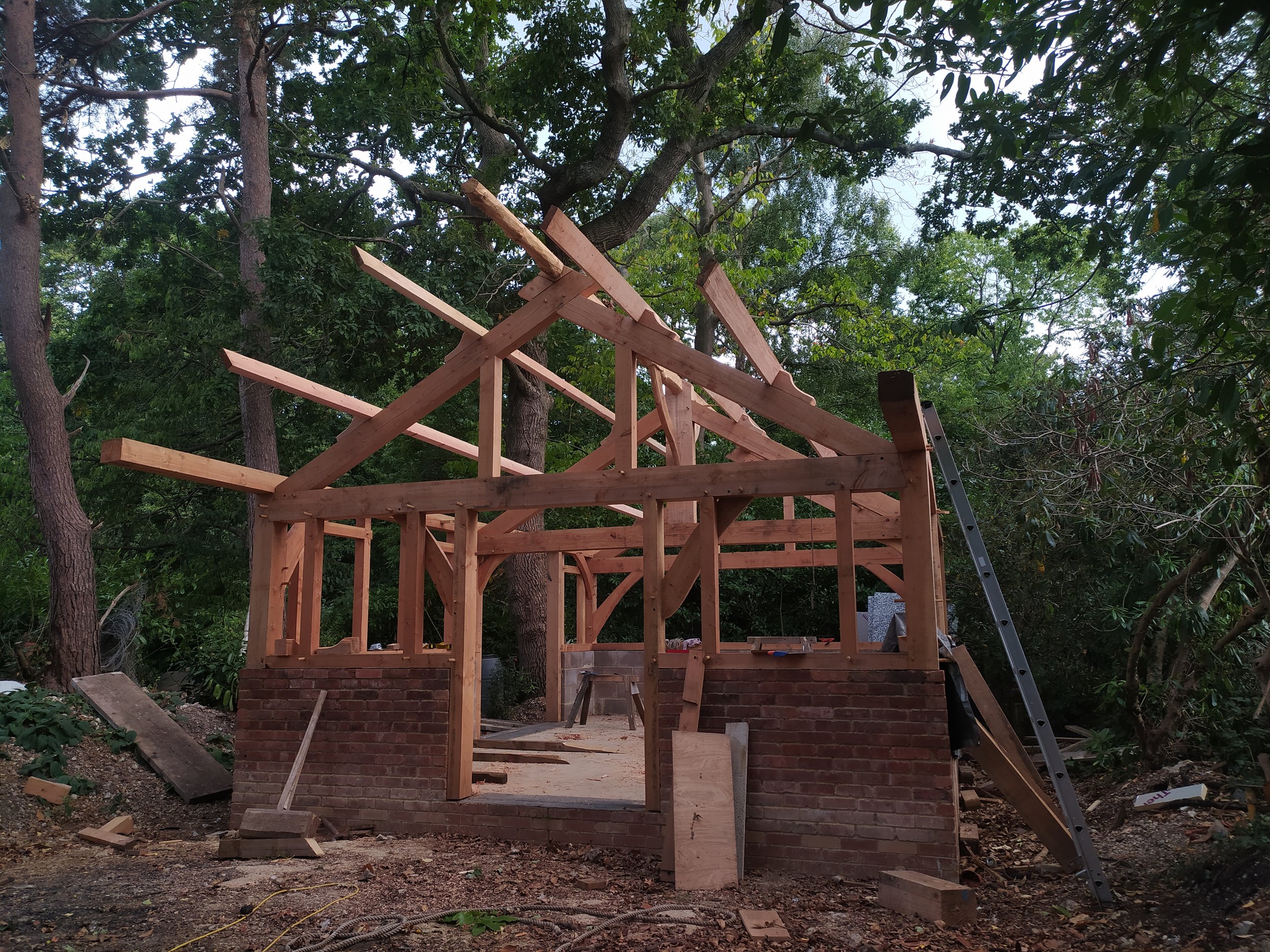
The roof structure is completed
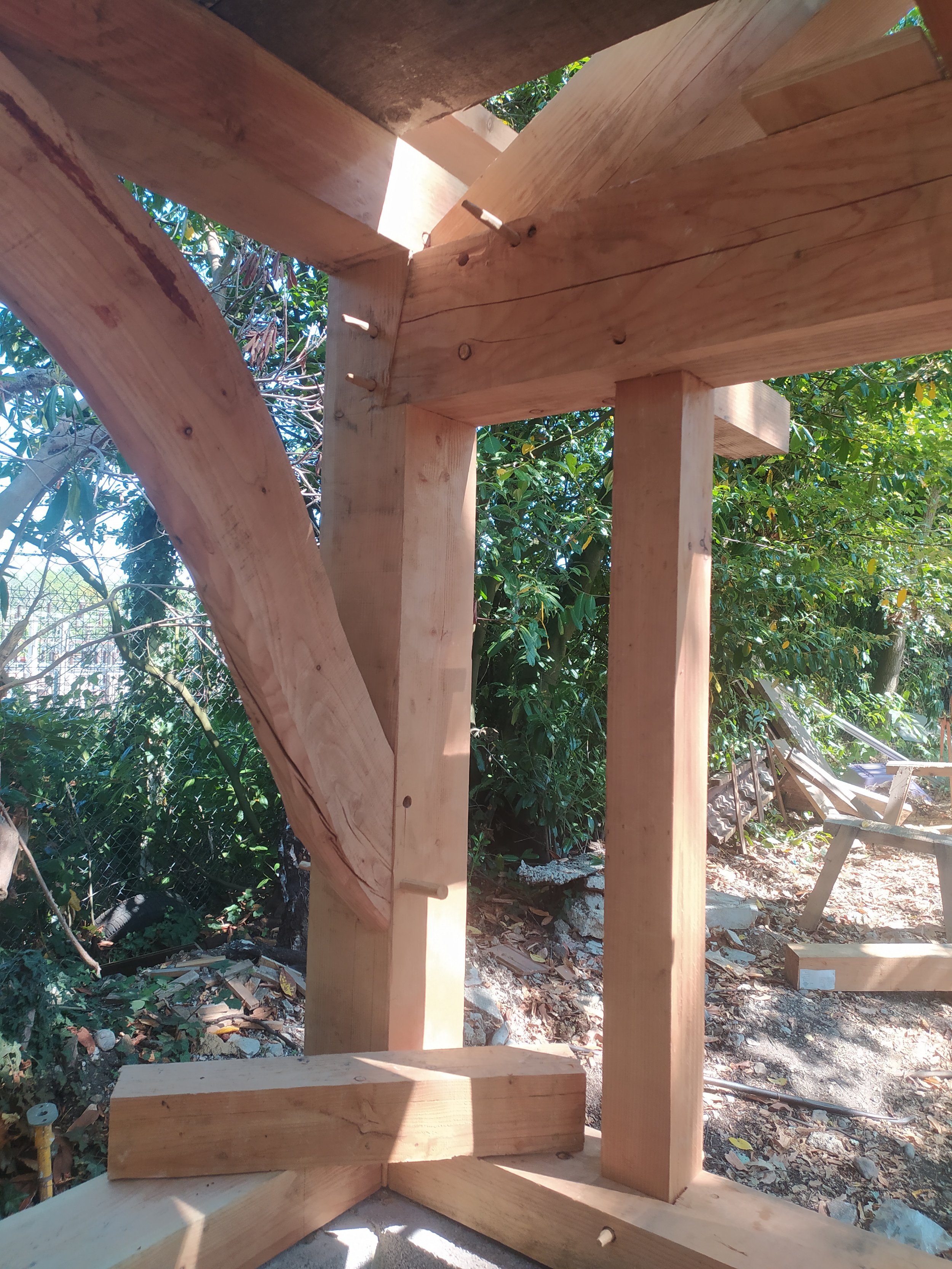
A detail showing the complex joinery at the corners of the building
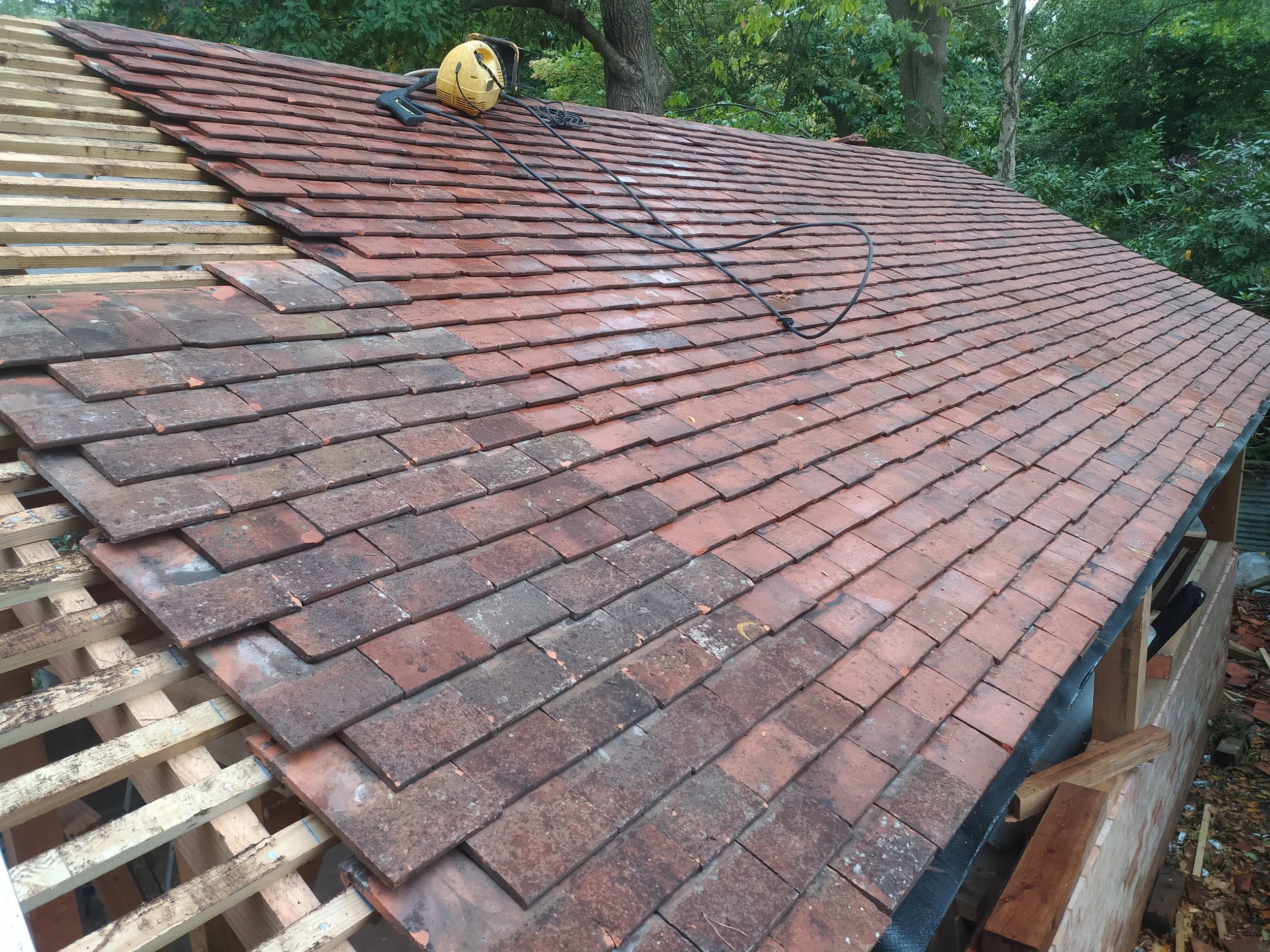
The roof tiles were salvaged from a local house, they had been on the roof for over 100 years and required some cleaning to restore them.
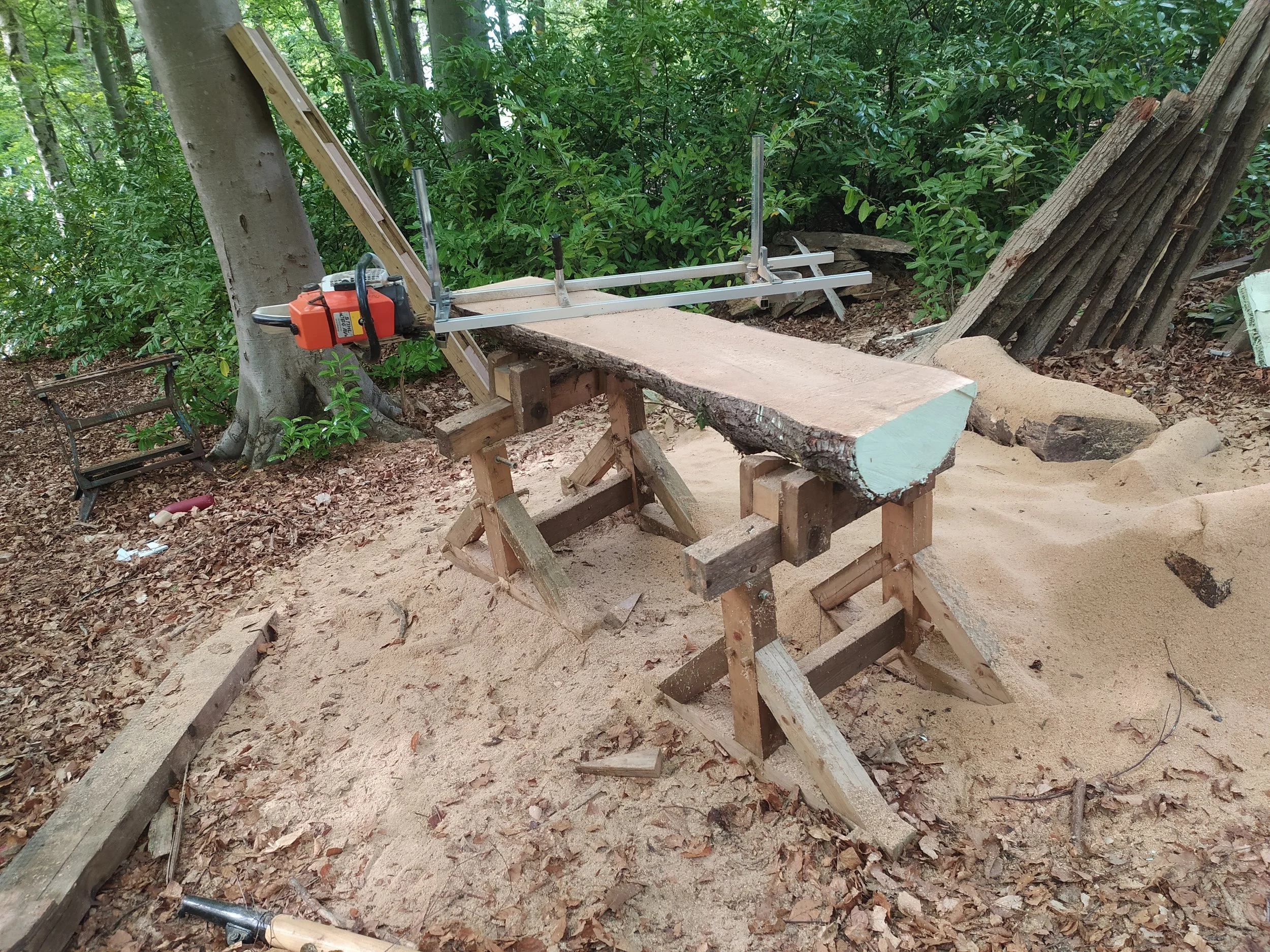
Chesnut logs were collected from the surrounding woodland. These were either from trees blown down in storms, or removed due to disease
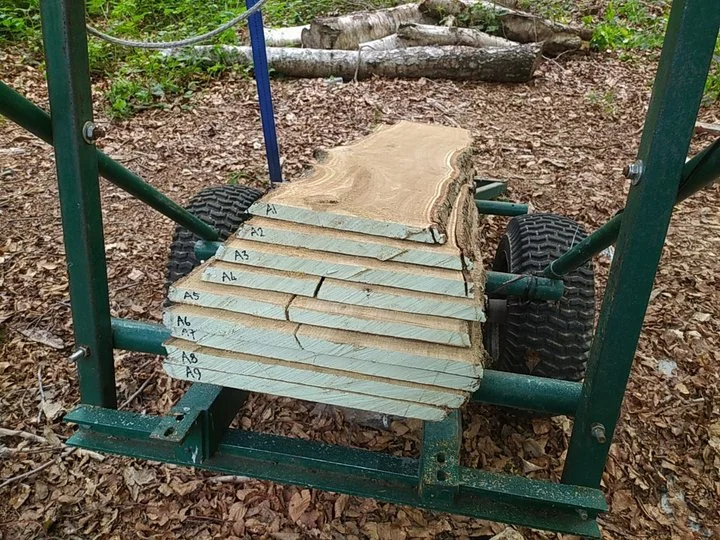
The chainsaw is used to cut the wood in to slices to be used for the cladding and the windows and doors.
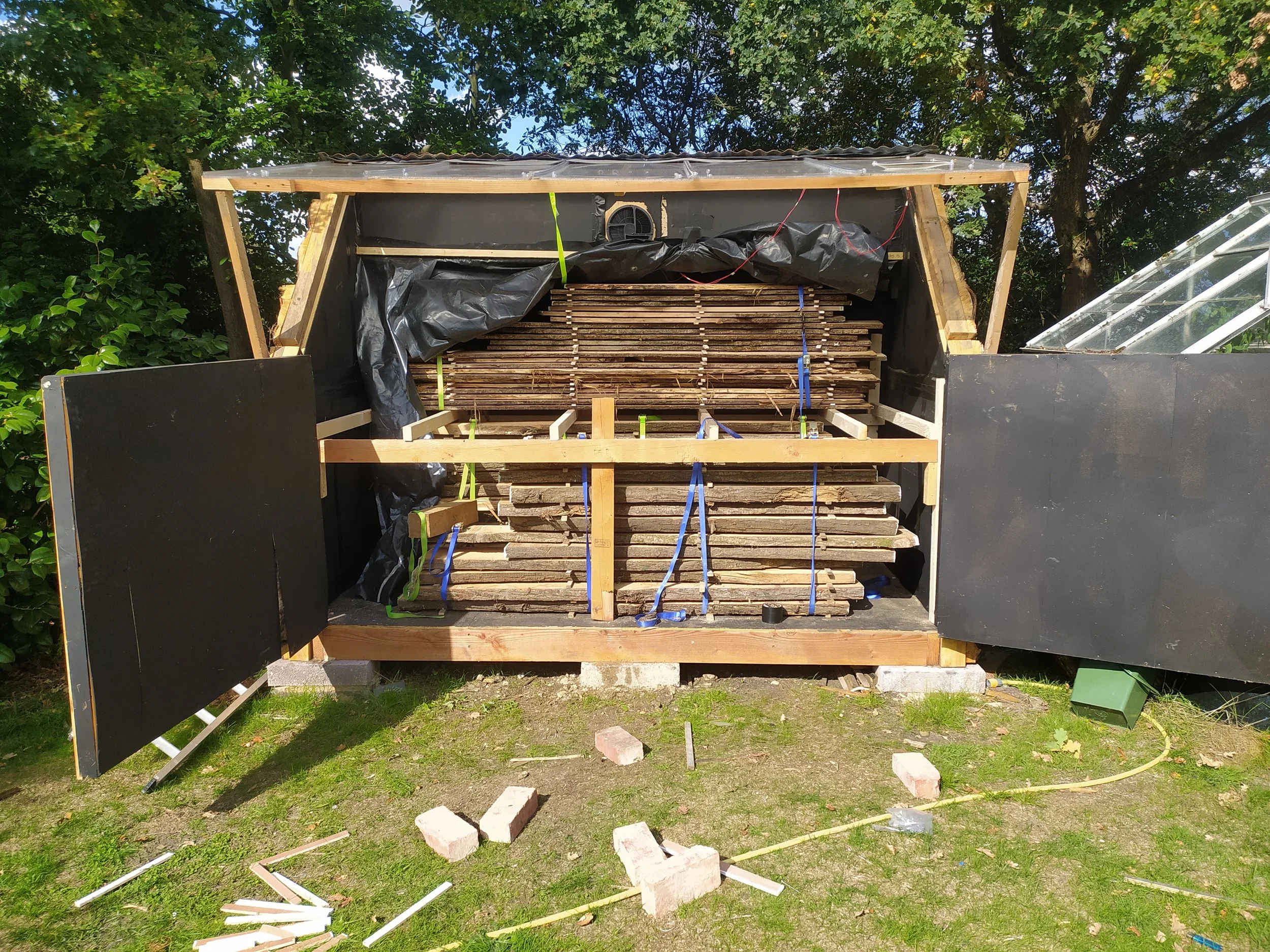
This timber is then dried in the solar kiln, which uses no electricity, just the power of the sun to heat the internal space and solar powered fans to ventilate.
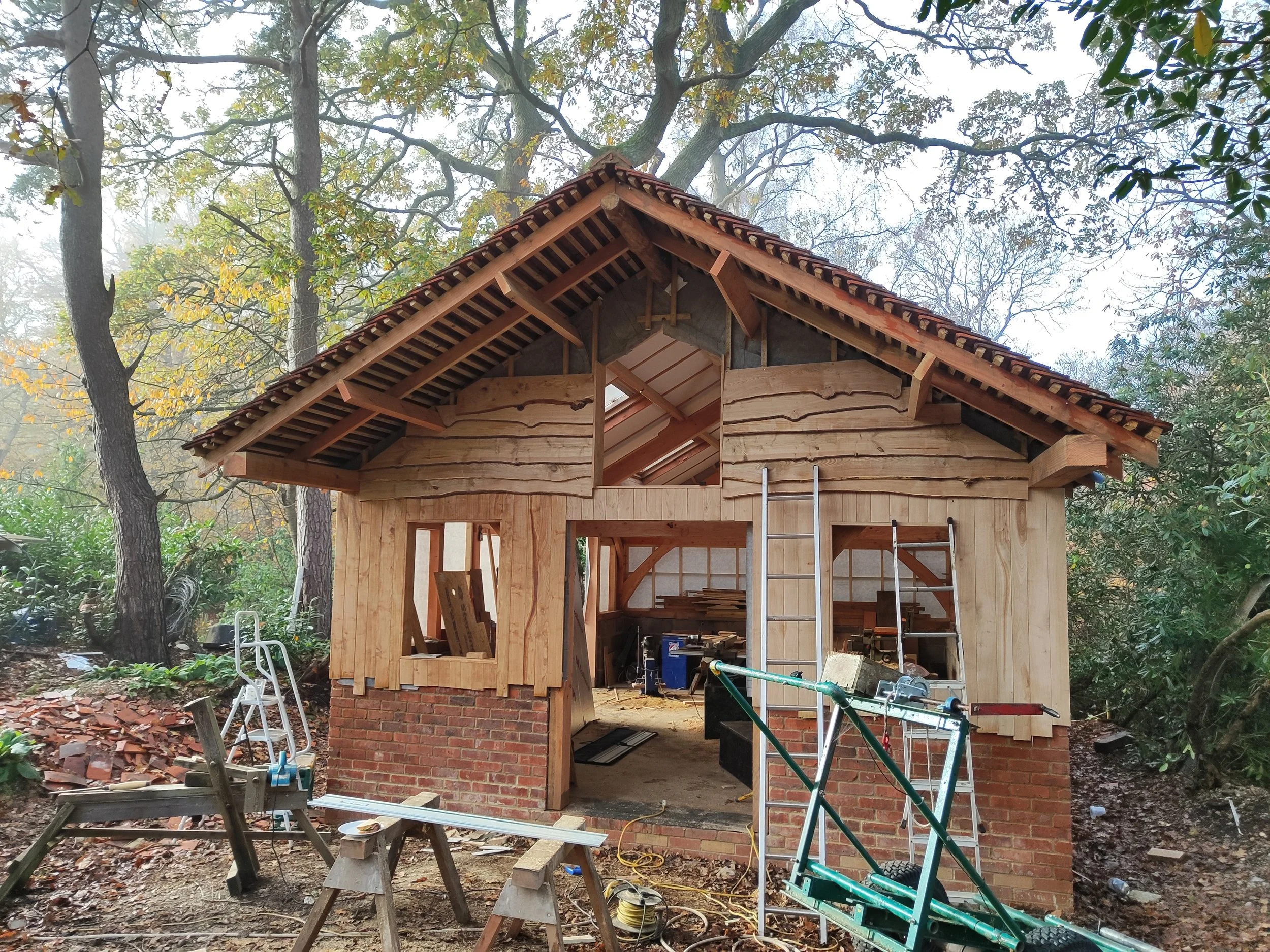
The reclaimed chesnut was used to clad the building.
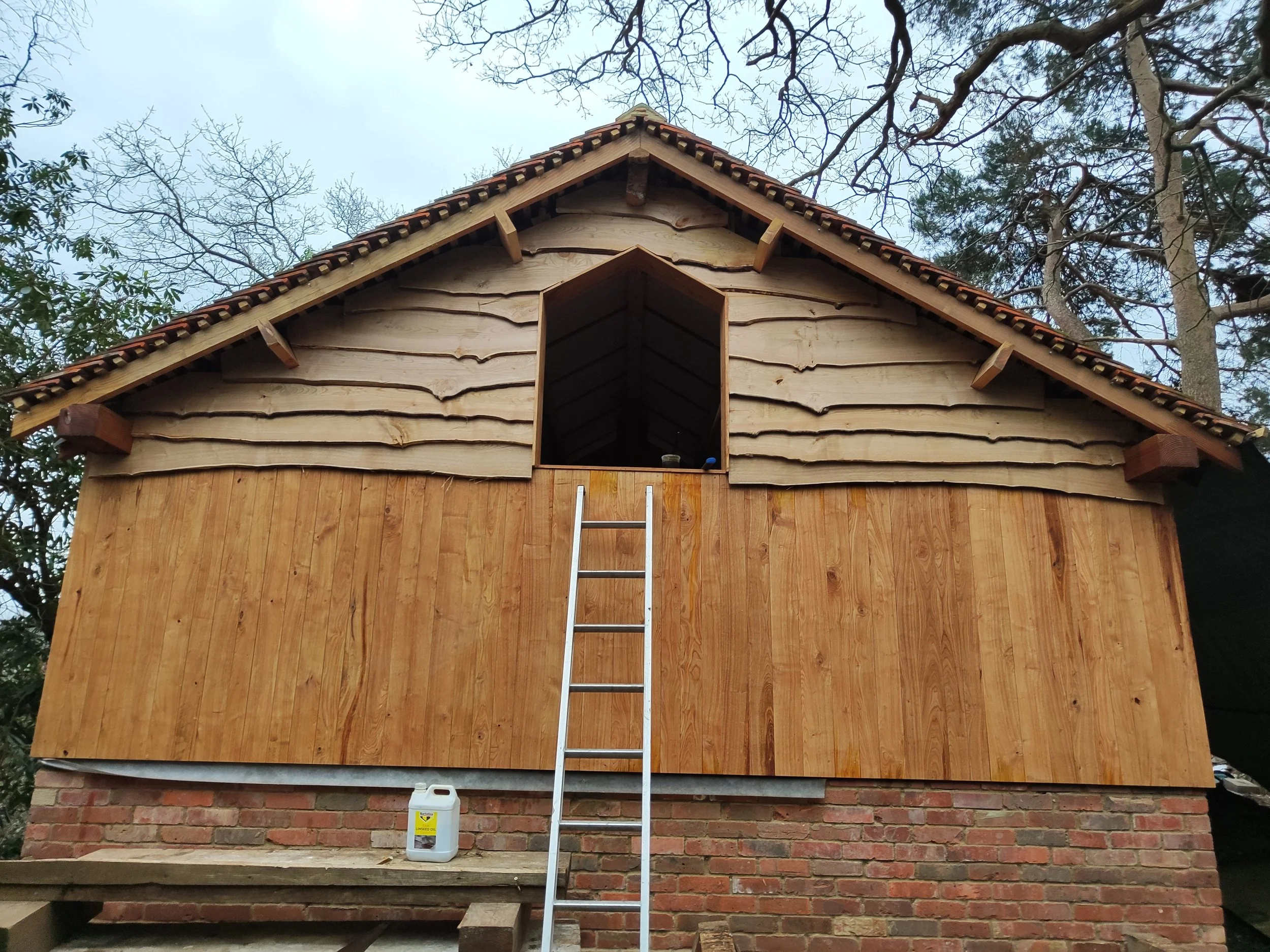
The back of the building has the cladding completed.
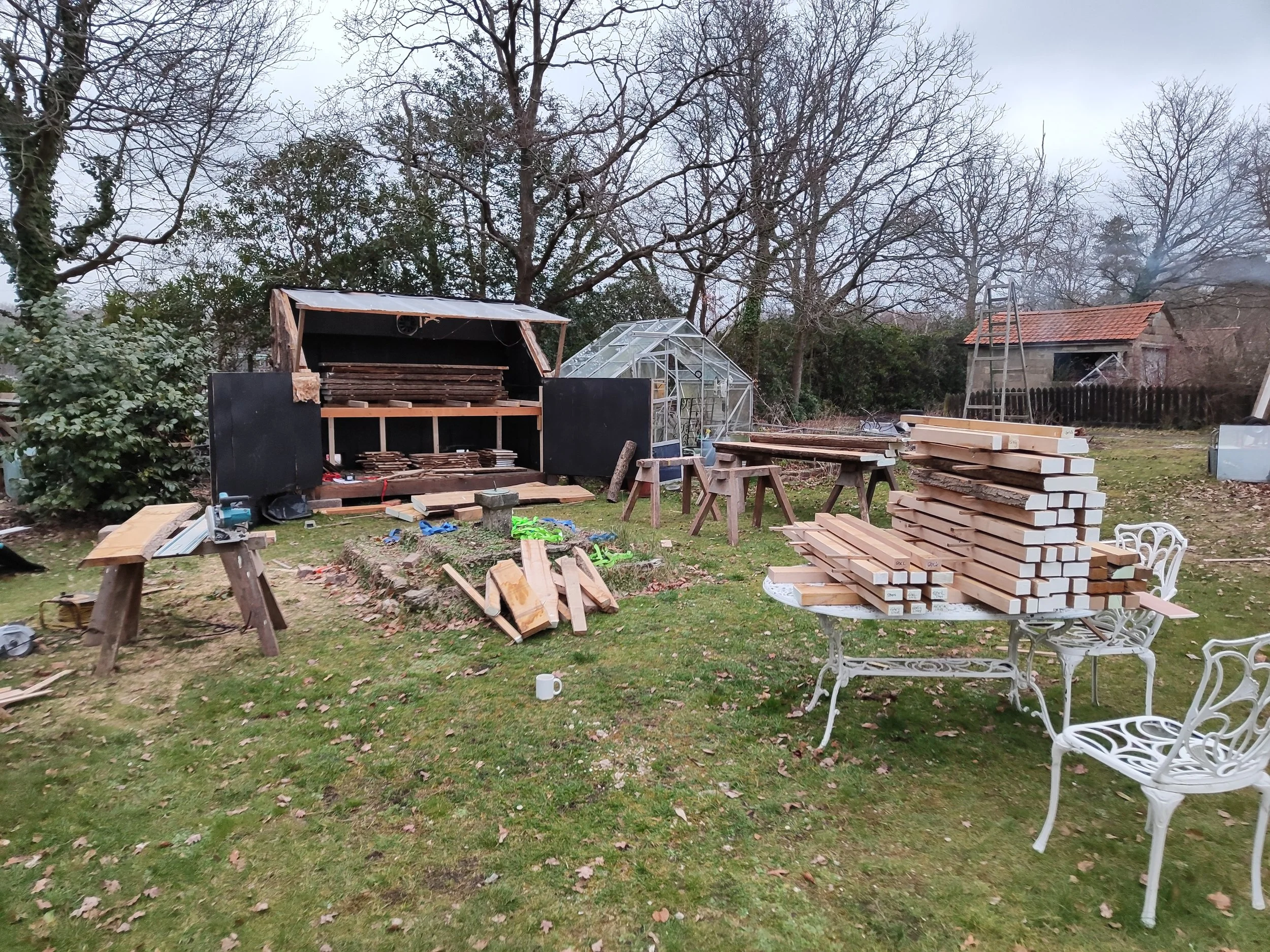
The reclaimed timber to build all of the windows and doors is sorted and rough cut.
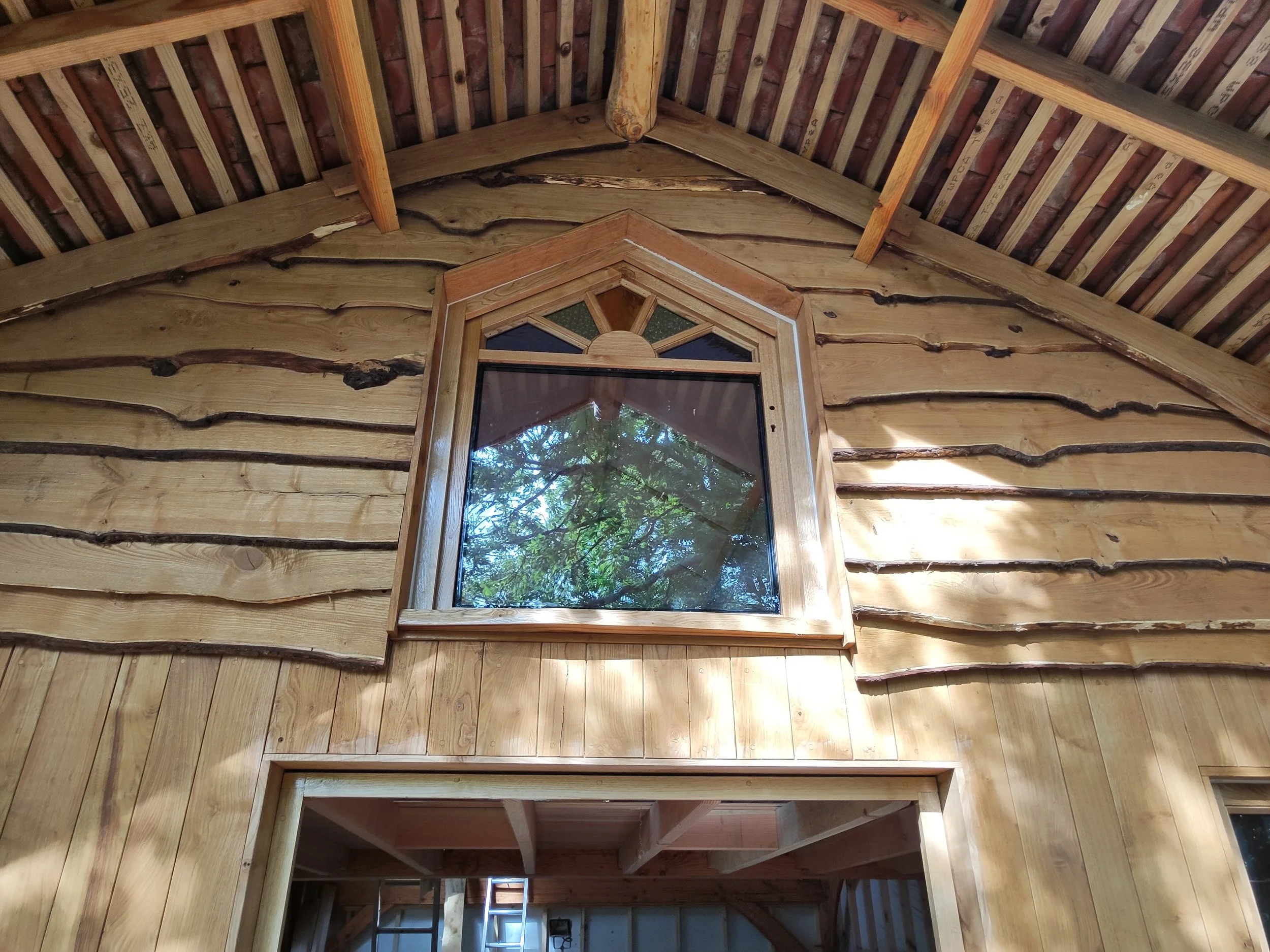
The finished upper window with stained glass fan light.
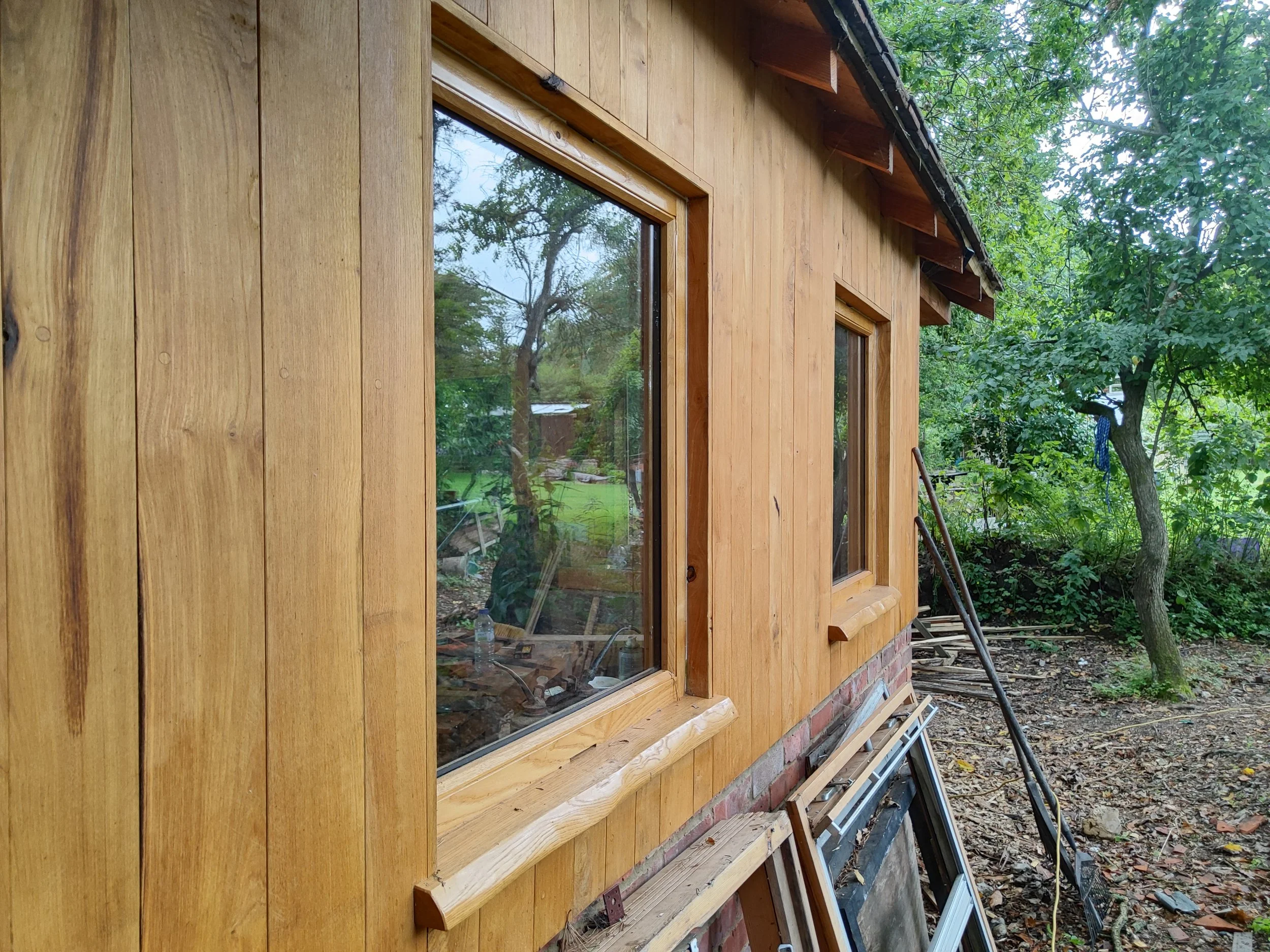
The rest of the windows are constructed from reclaimed Chesnut and fitted.
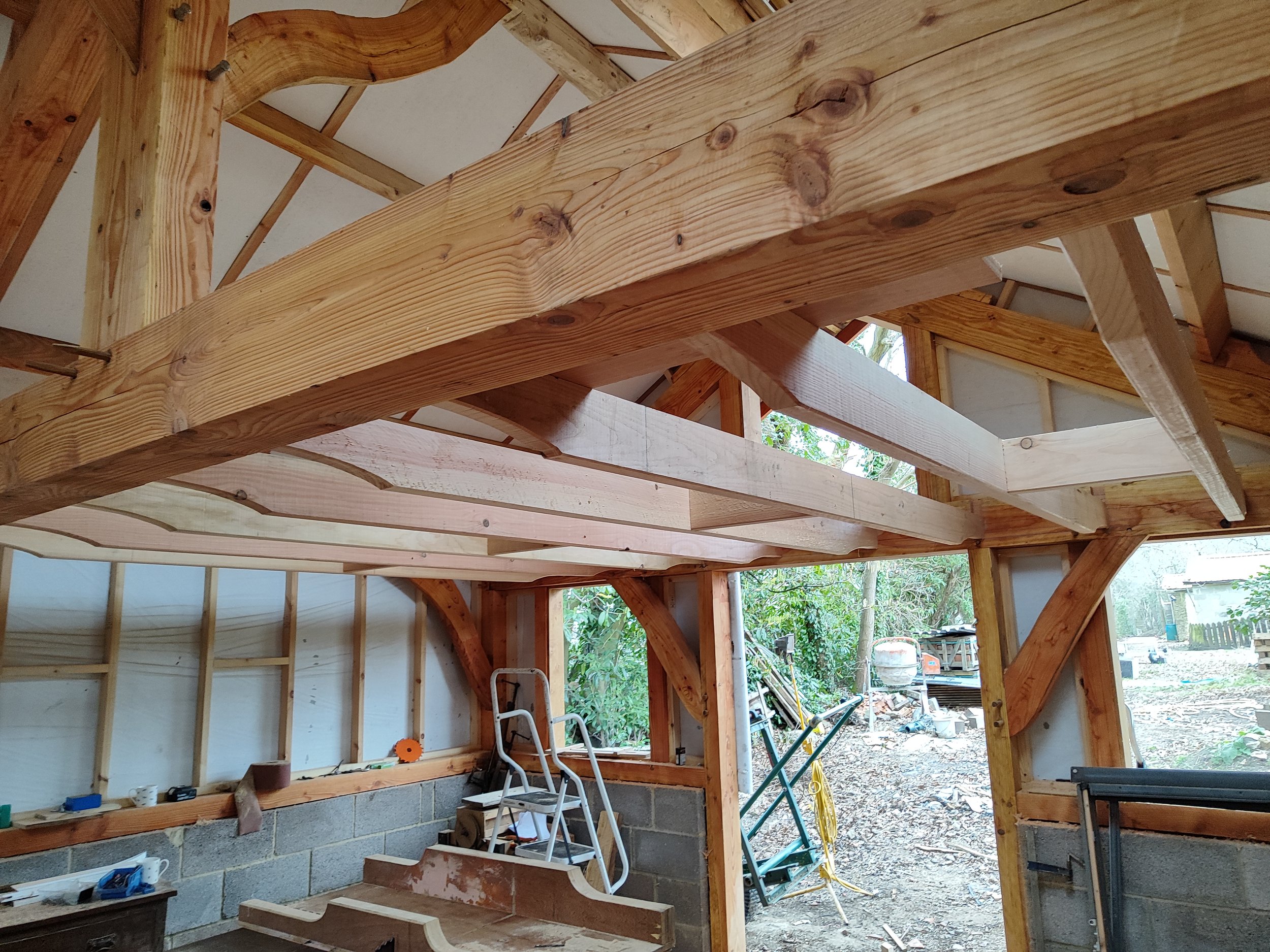
Building the floor for the upstairs storeroom.
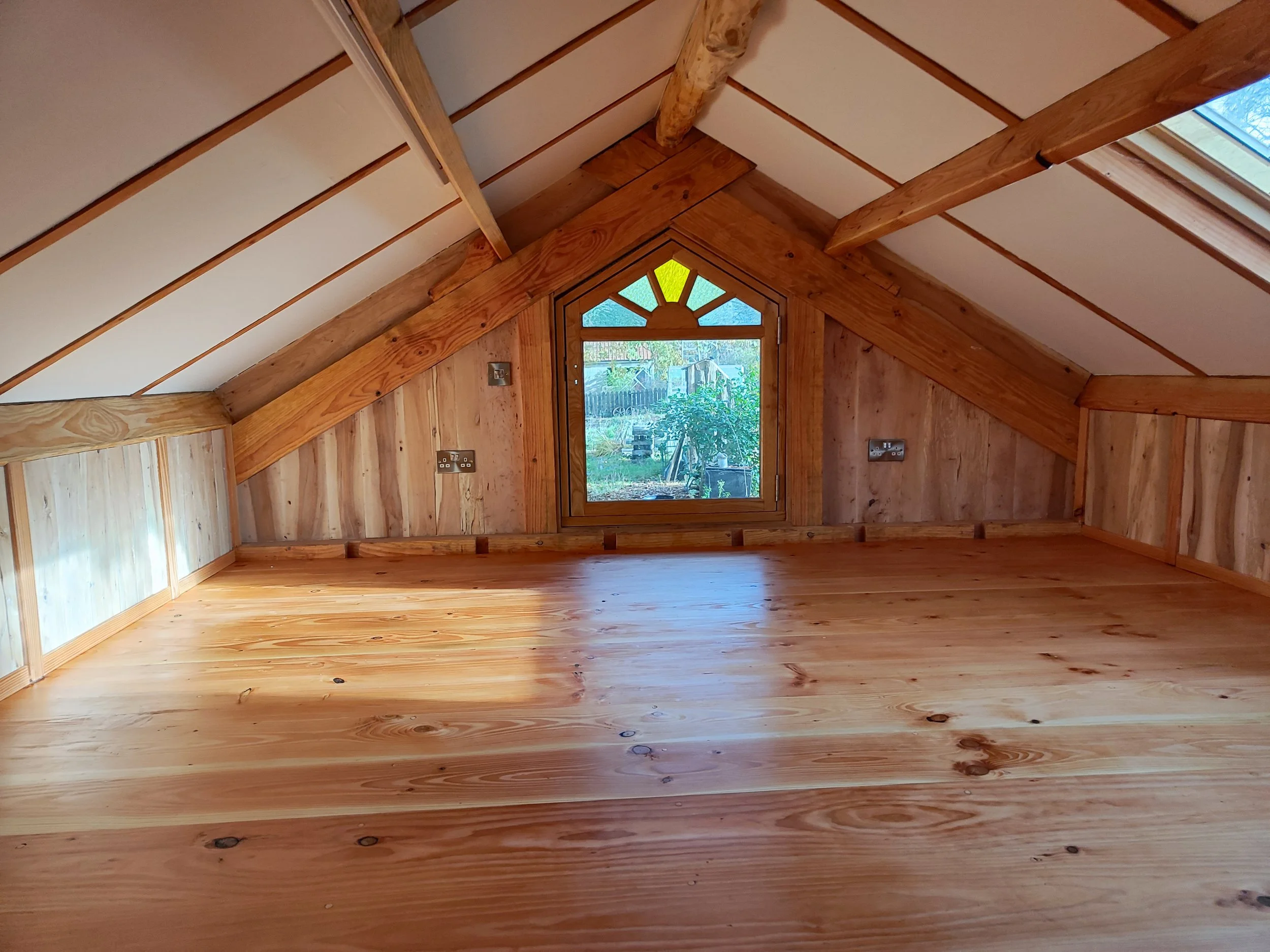
The inside of the storeroom upstairs.
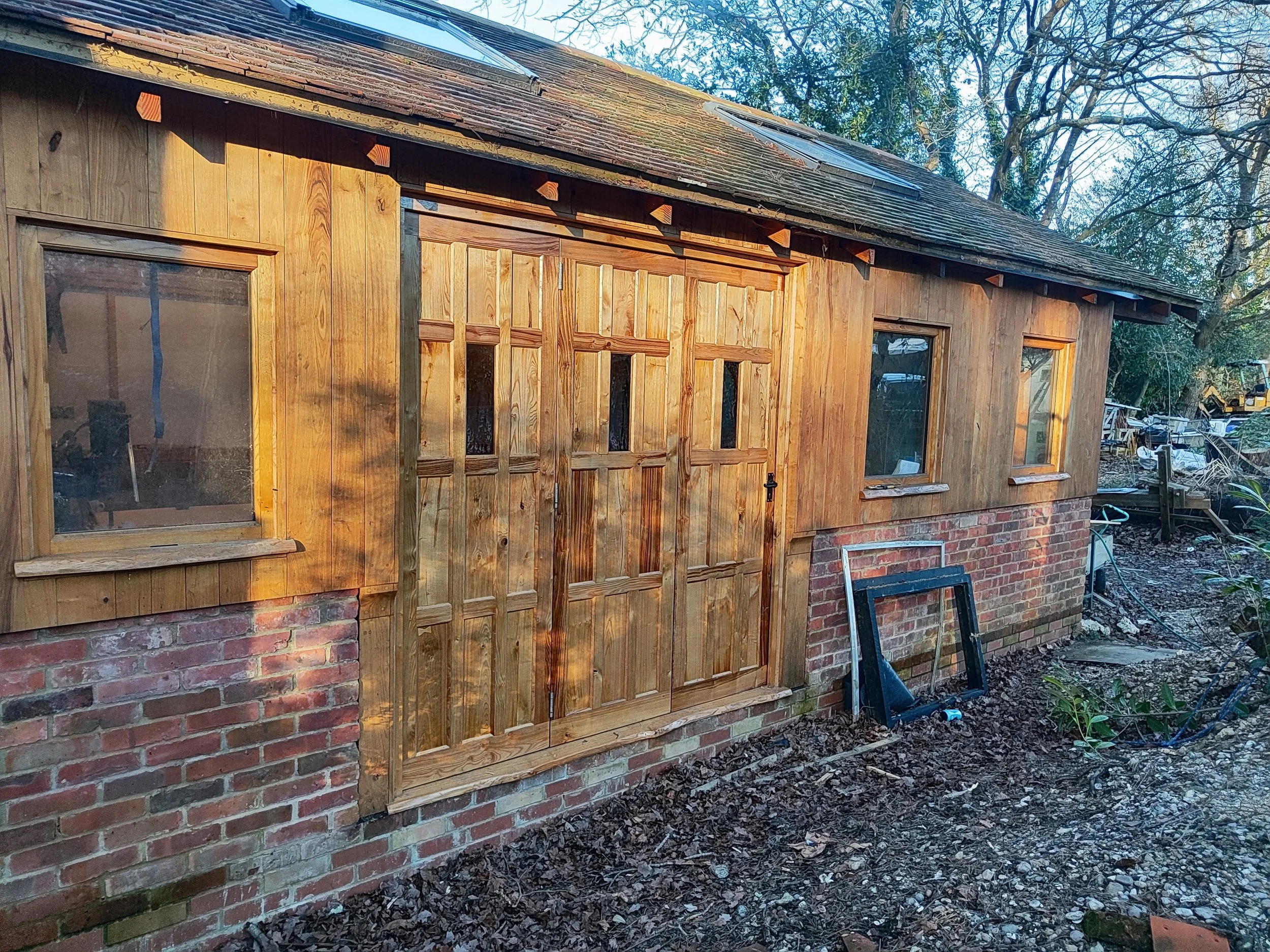
The doors are fitted and complete.
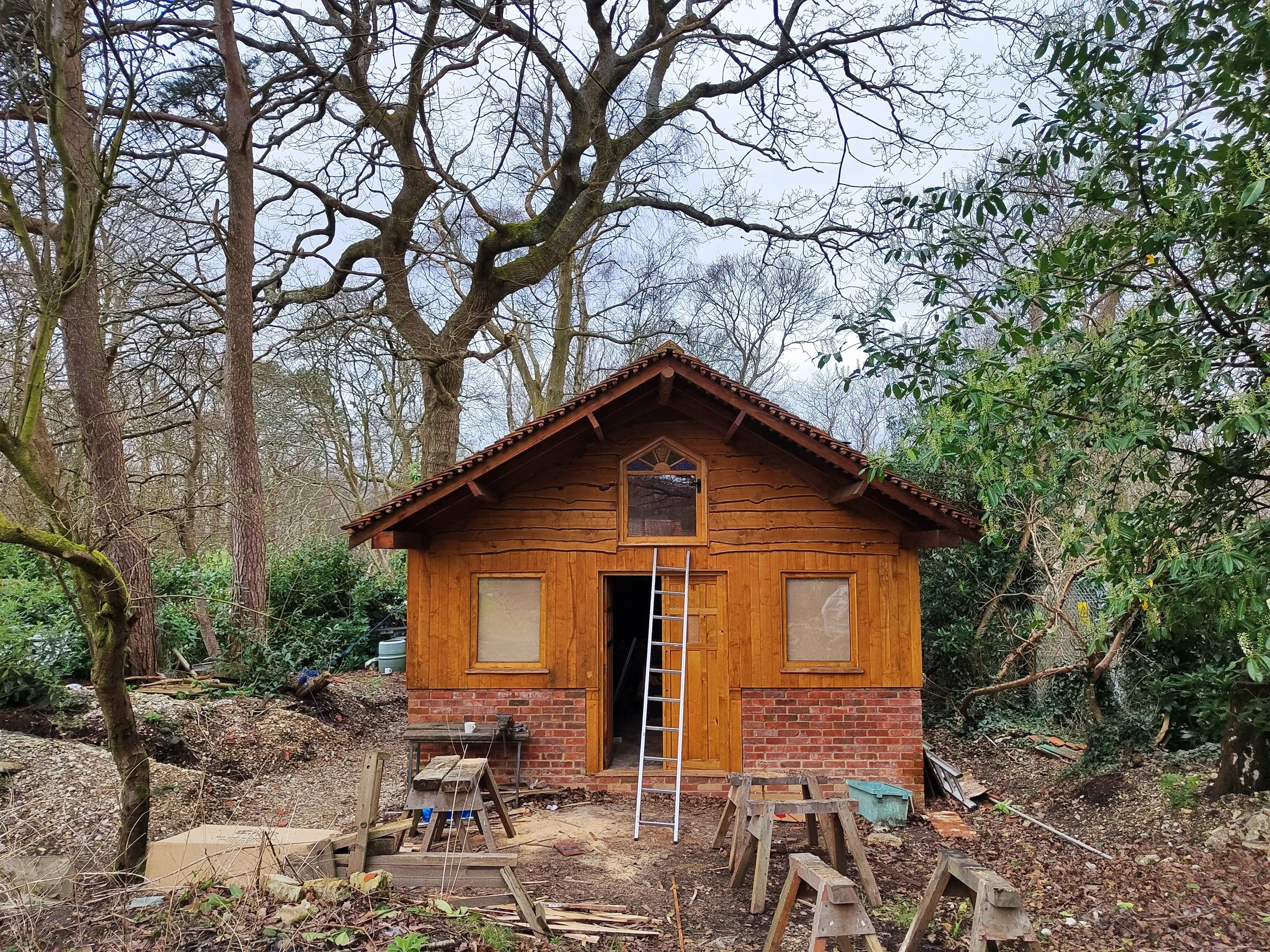
The completed front of the workshop, with the cladding completed and treated with linseed oil.
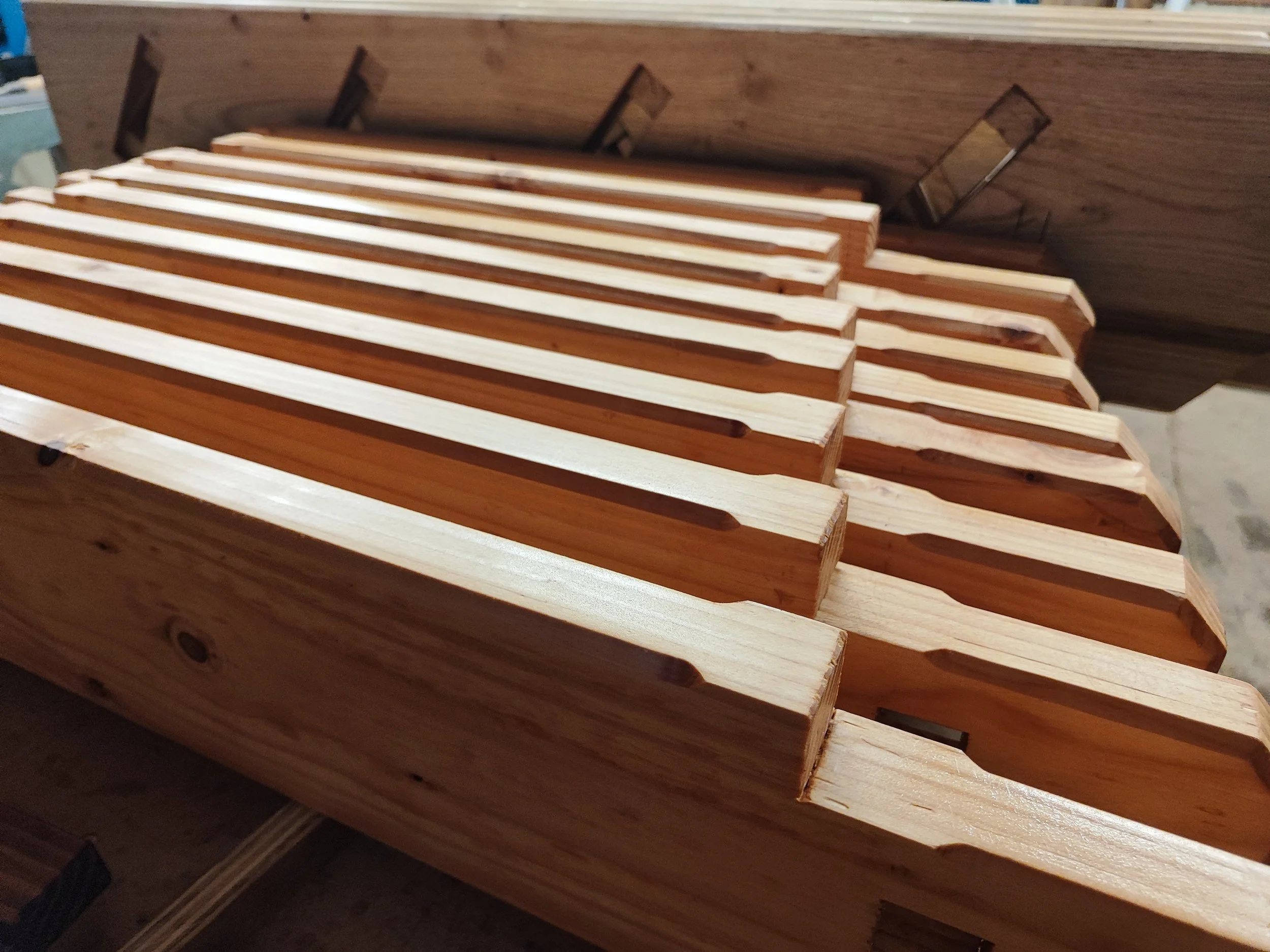
The stair treads are completed.
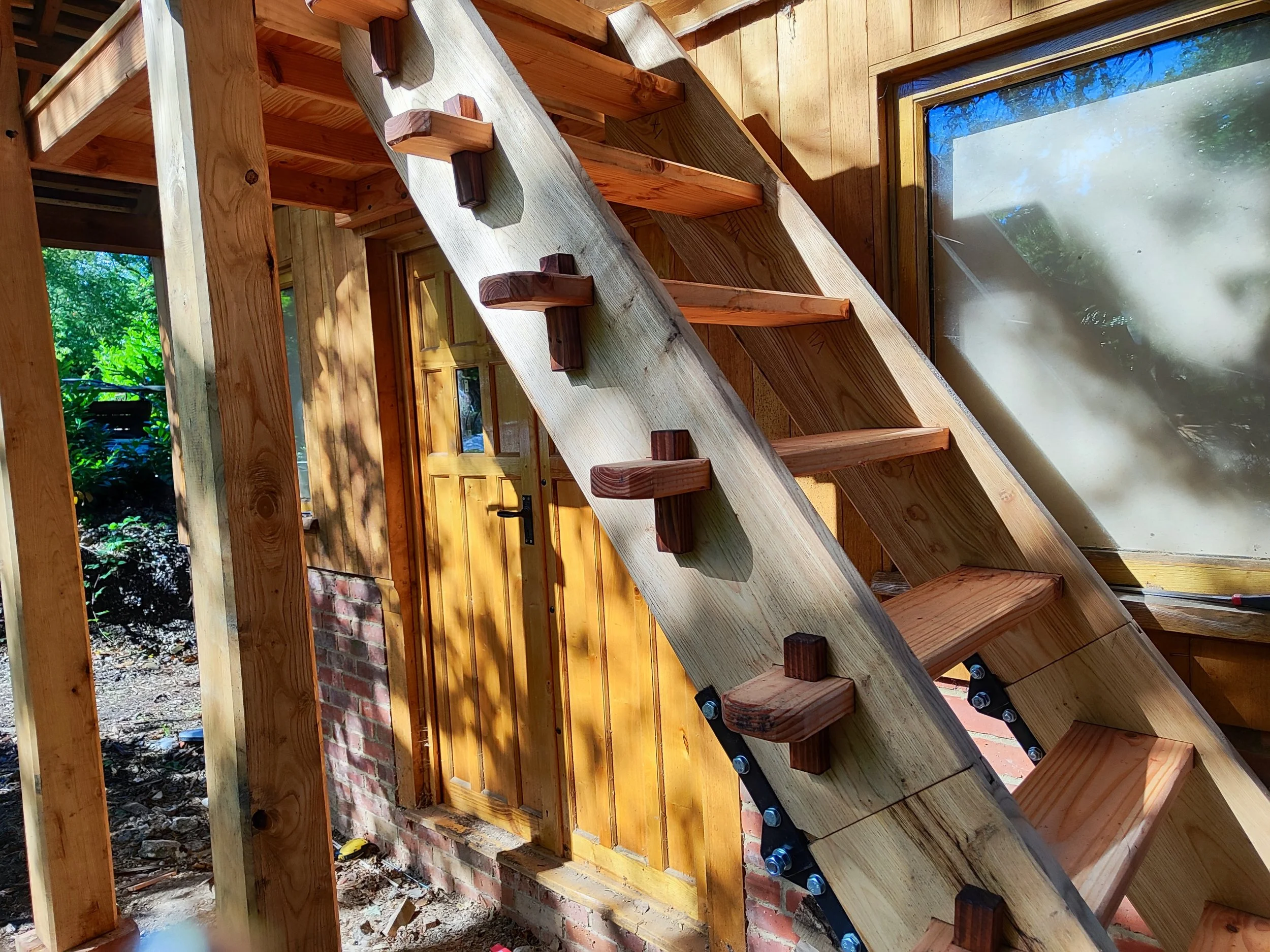
Stairs up to the store room, made with through tenons and wedges.
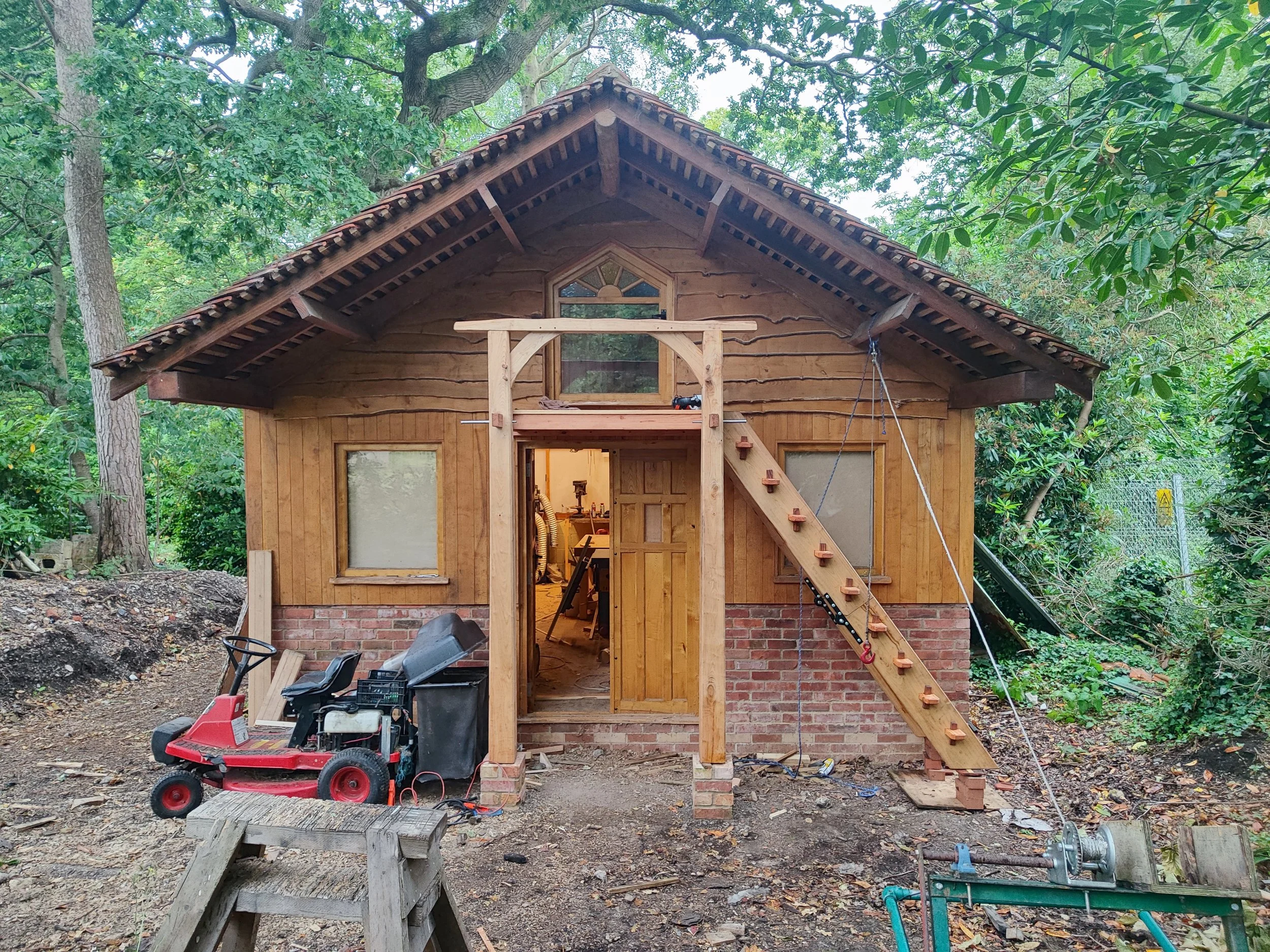
The completed stairs and balcony up to the storeroom.